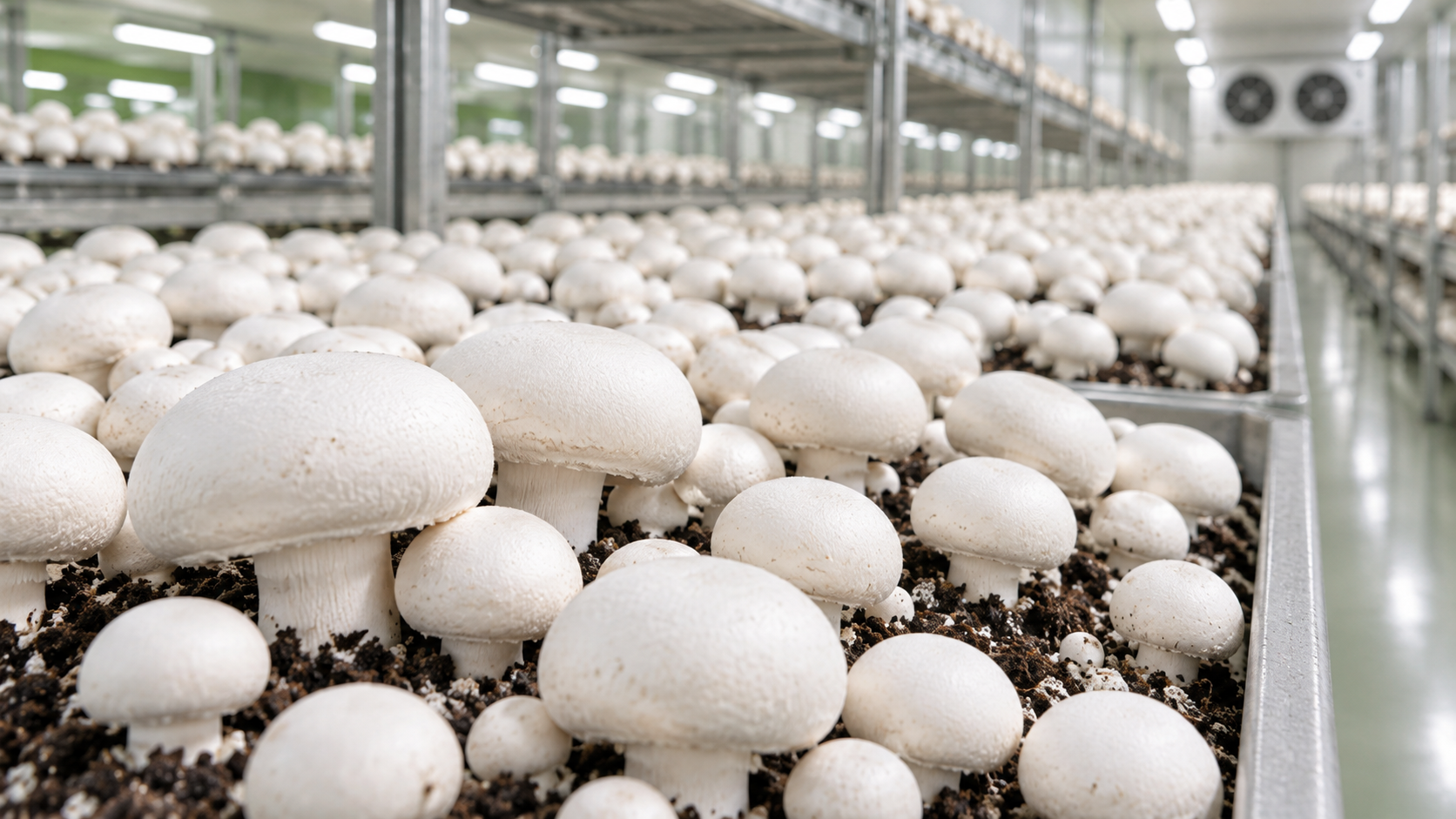
01 / EVERYDAY FAVOURITE
White button
Clean tasting and versatile, white button mushrooms fit everyday curries, stir-fries, soups, and snacks. Careful harvesting and packing help protect their bright appearance.
 mushroom360°
Our ambition is to bring carefully grown, European-quality mushrooms to Indian households, village markets, restaurants, and neighbourhood streets.
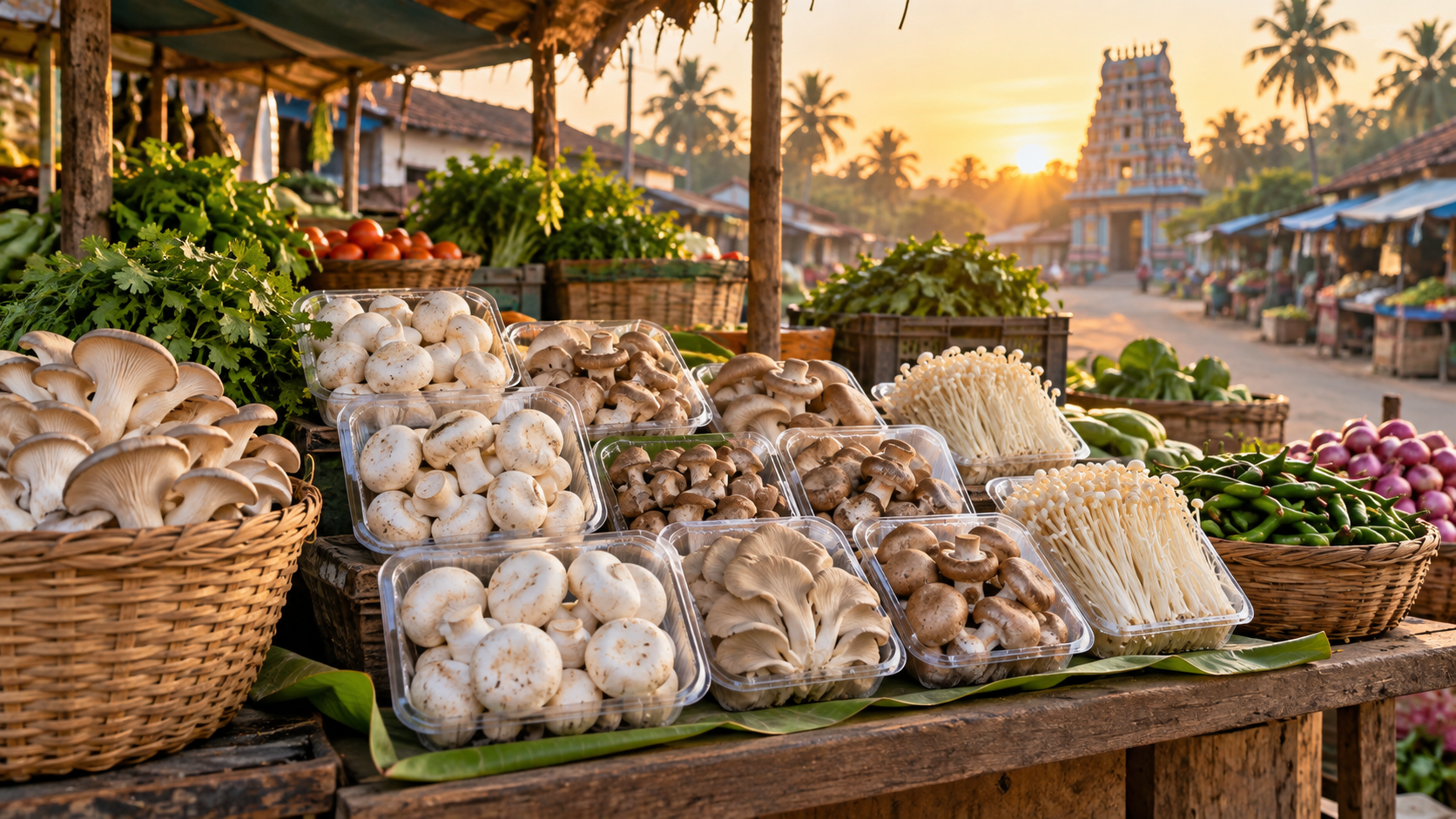
Our travels showed us how much care can go into growing, presenting, and delivering fresh mushrooms. We want to bring that same quality mindset to India.
Mushroom360 is being planned in Coimbatore, Tamil Nadu. We believe excellent mushrooms should be available beyond premium supermarkets: in village shops, local streets, family kitchens, and the food businesses that serve them.
That means thinking through the entire journey. We aim to work with experienced growers and suppliers, select suitable European and American equipment, design climate-controlled rooms, manage cultivation consistently, and pack produce with freshness in mind. The goal is dependable quality at a scale that can reach more communities.
We plan to begin with button and oyster mushrooms, evaluate other varieties, and build a strong operating model before expanding. Our first facility is a 2027 launch target, with a planned capacity of up to 20 tonnes per day after commissioning and ramp-up.
Explore the business roadmap ↗Each variety has its own texture, flavour, growing needs, and place in the kitchen. These images are illustrative; our final commercial range will depend on trials and market planning.
Clean tasting and versatile, white button mushrooms fit everyday curries, stir-fries, soups, and snacks. Careful harvesting and packing help protect their bright appearance.
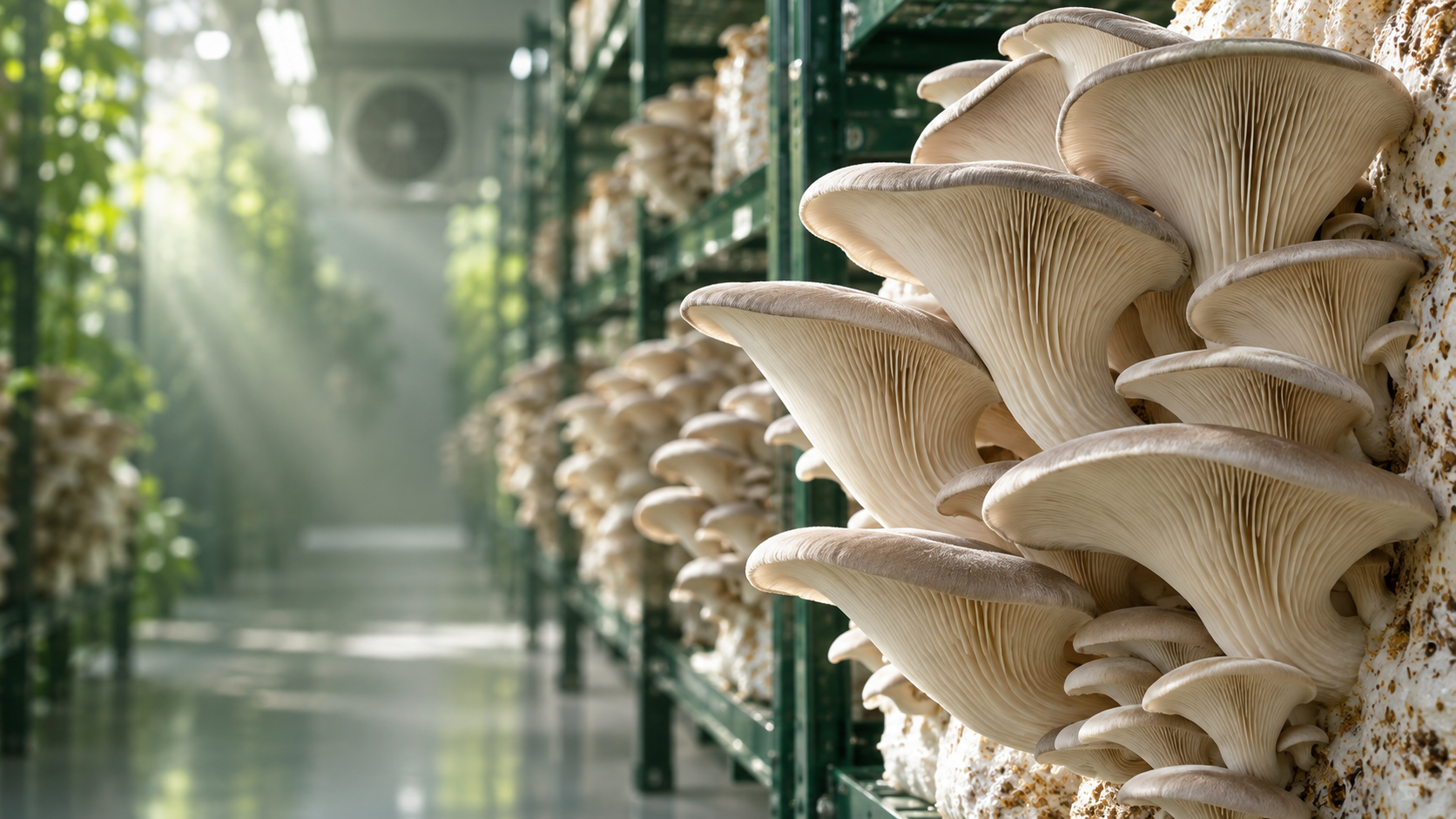
Oyster mushrooms grow in layered clusters. Their tender texture suits quick cooking, from South Indian dishes to noodles and grills. Gentle handling protects their shape.
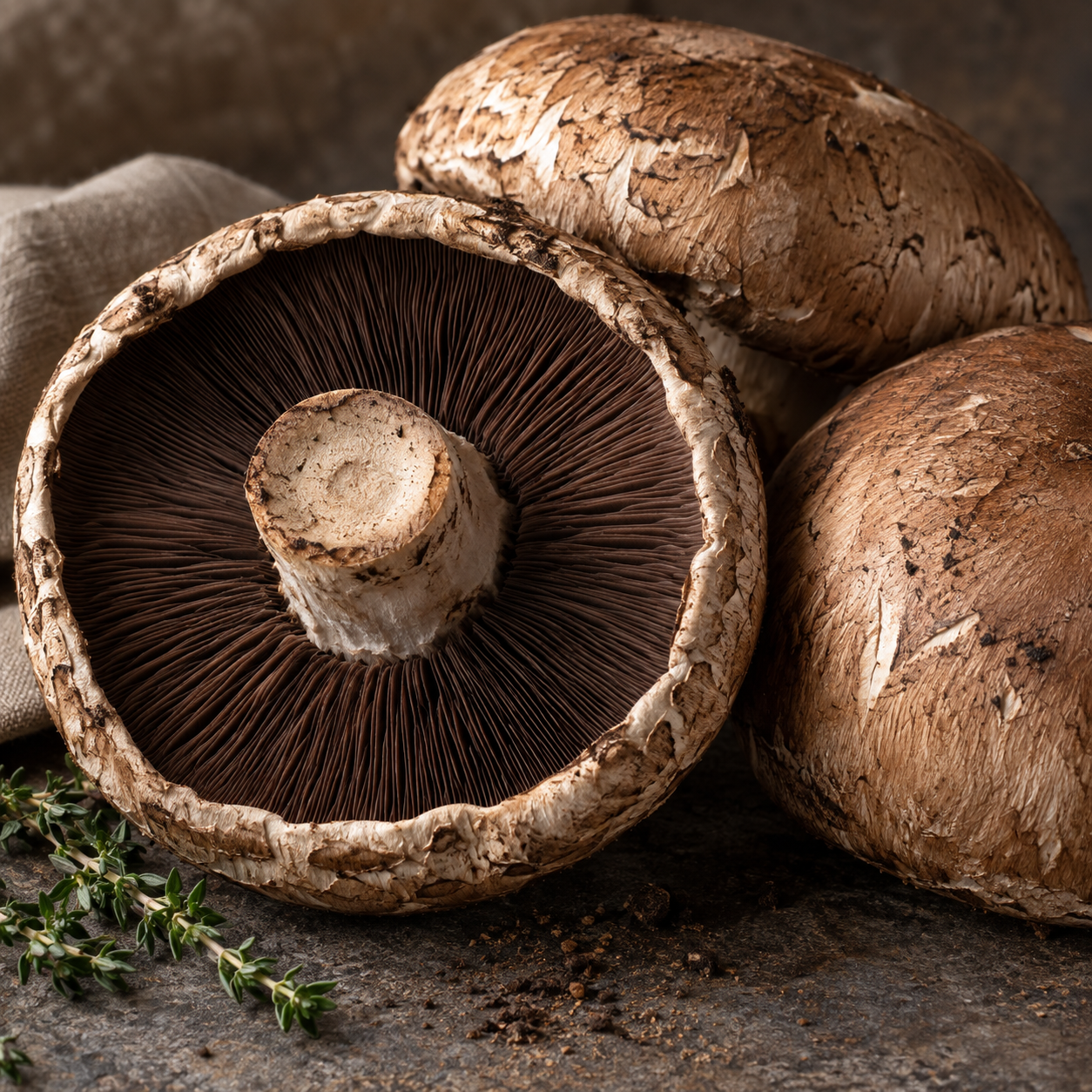
Large mature brown mushrooms bring a robust texture to grills, burgers, and oven dishes. One familiar mushroom family can serve a very different culinary purpose.
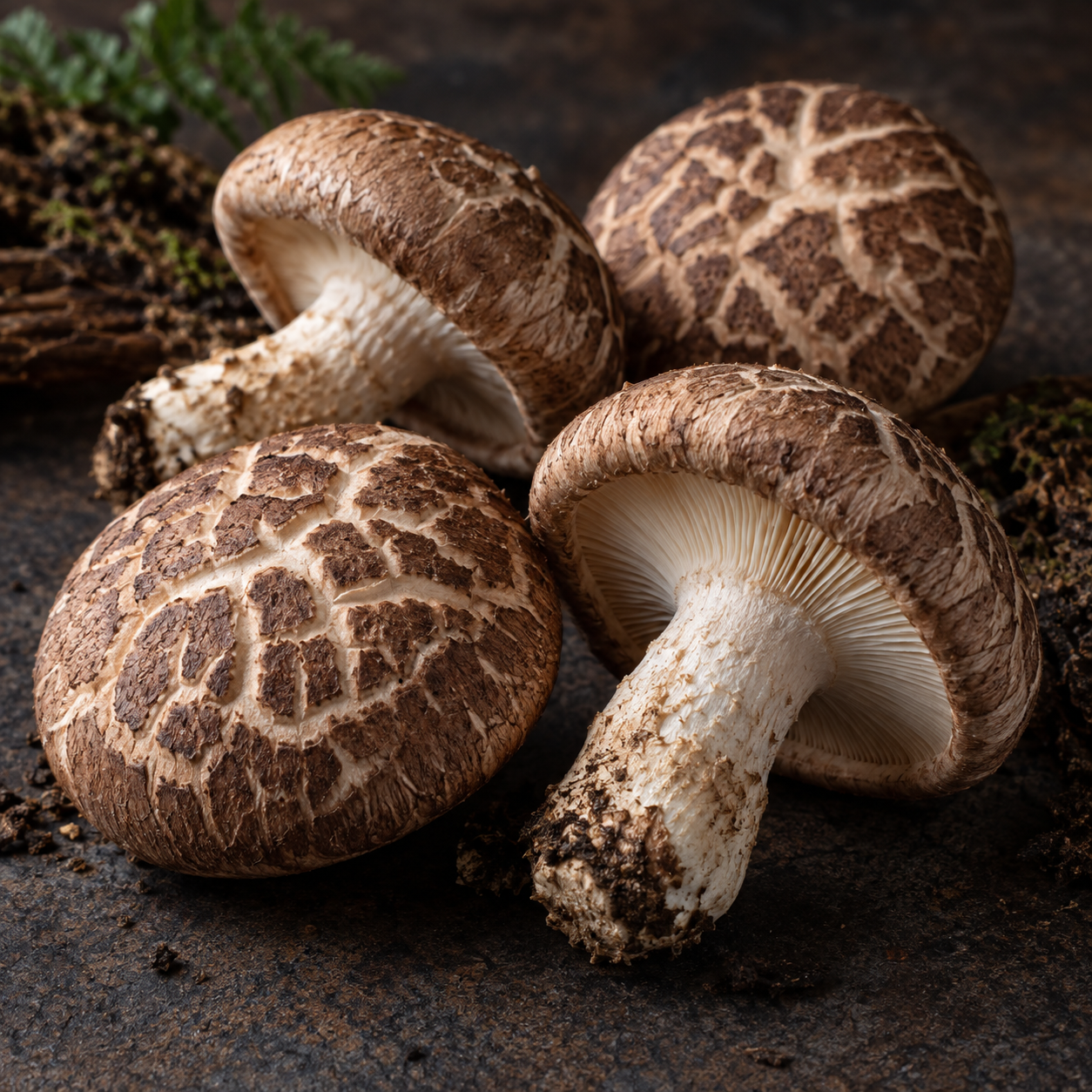
Recognised by their brown caps, shiitake mushrooms add a savoury note to broths, rice dishes, and sauces. They are part of our specialty-variety exploration.
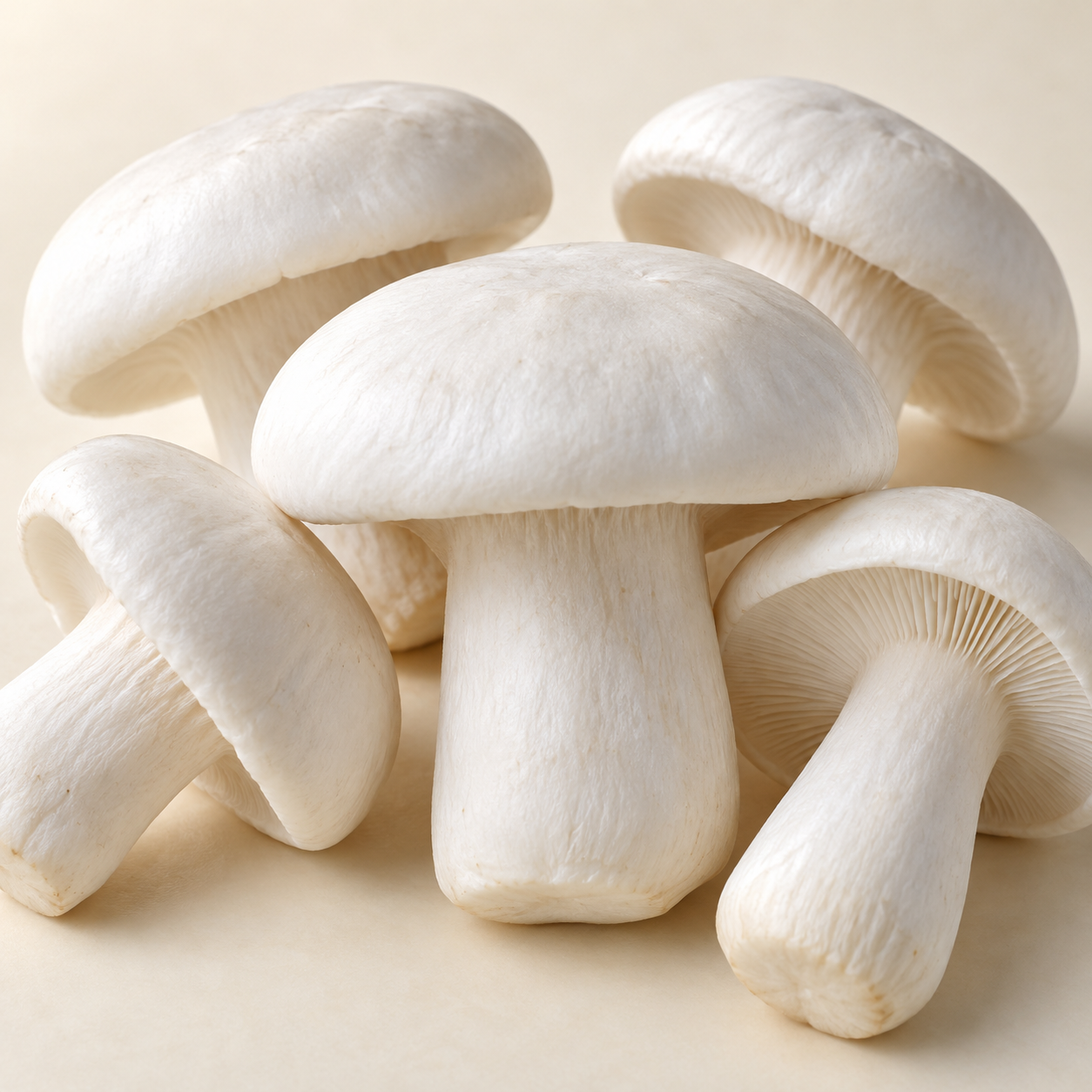
Milky mushrooms have a firm body and bright white appearance. We are interested in varieties that suit Indian cooking and can be assessed for local production.
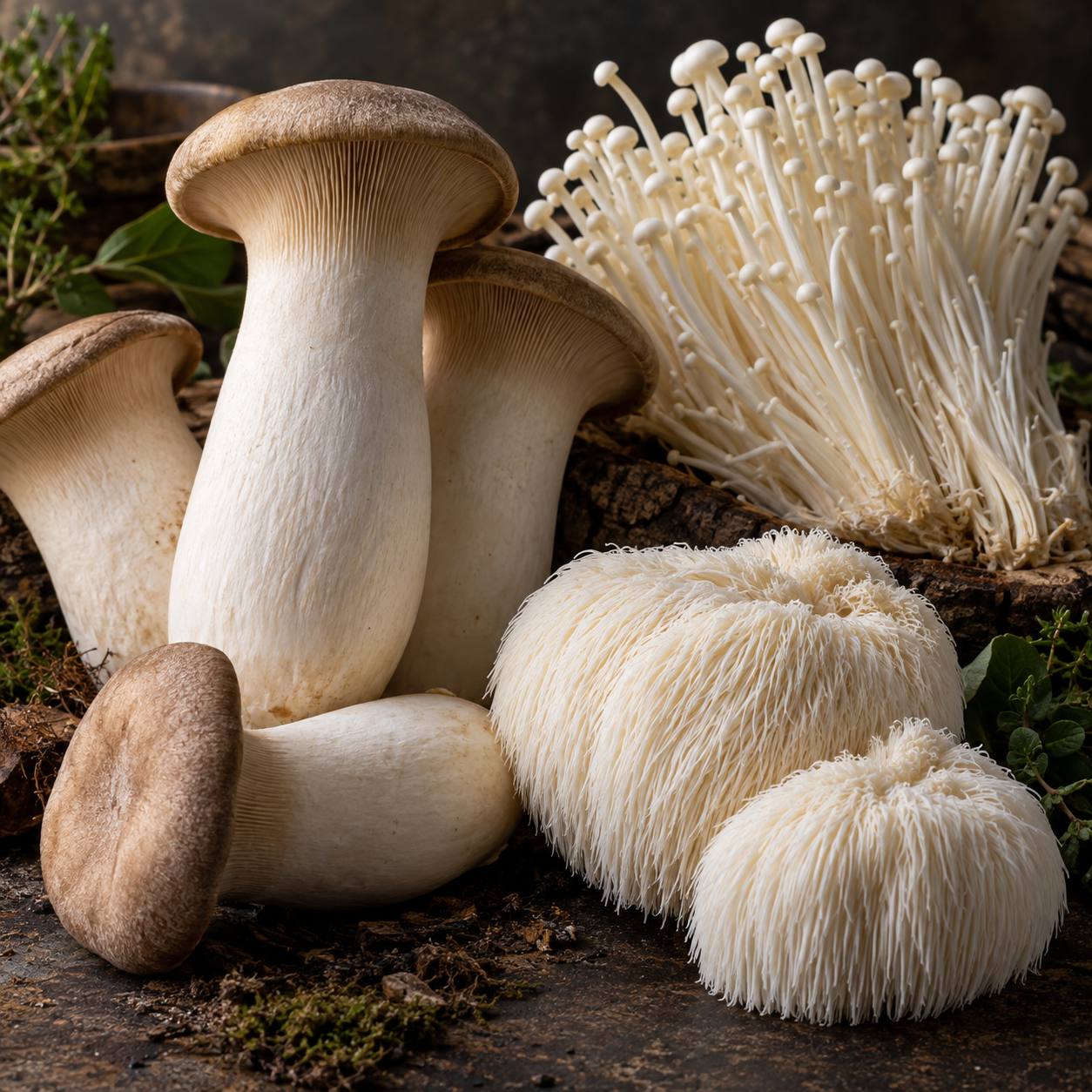
King oyster, enoki, and lion’s mane offer new textures for chefs and home cooks. Any addition to our range would follow cultivation trials and demand assessment.
From a neighborhood shelf to a wholesale buyer, packaging can help present mushrooms clearly and protect them during handling. These AI-generated images explore future Mushroom360° retail and bulk formats.
Clear packs and light paper bands for easy product recognition.
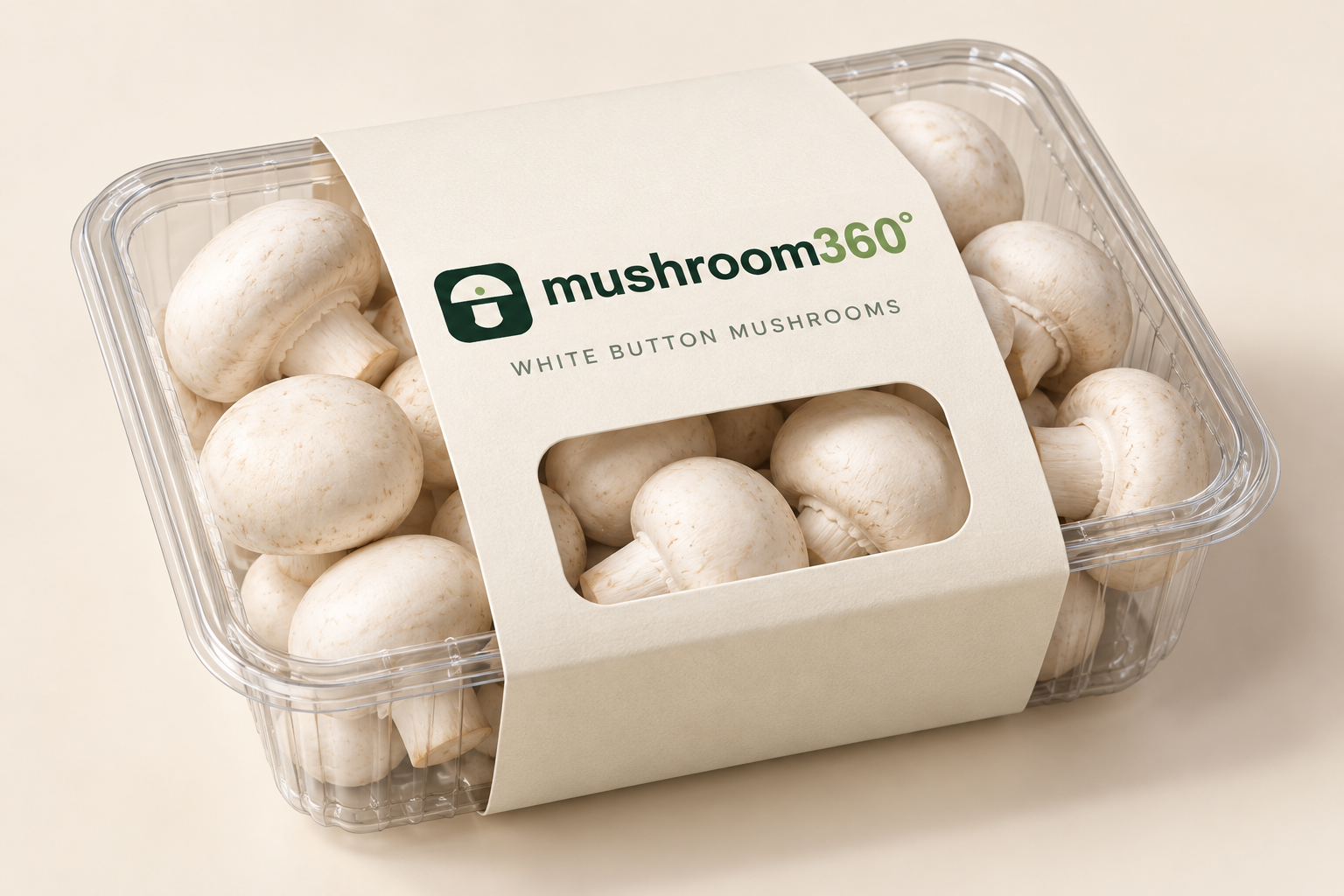
A clear pack and cream sleeve to showcase white button mushrooms.
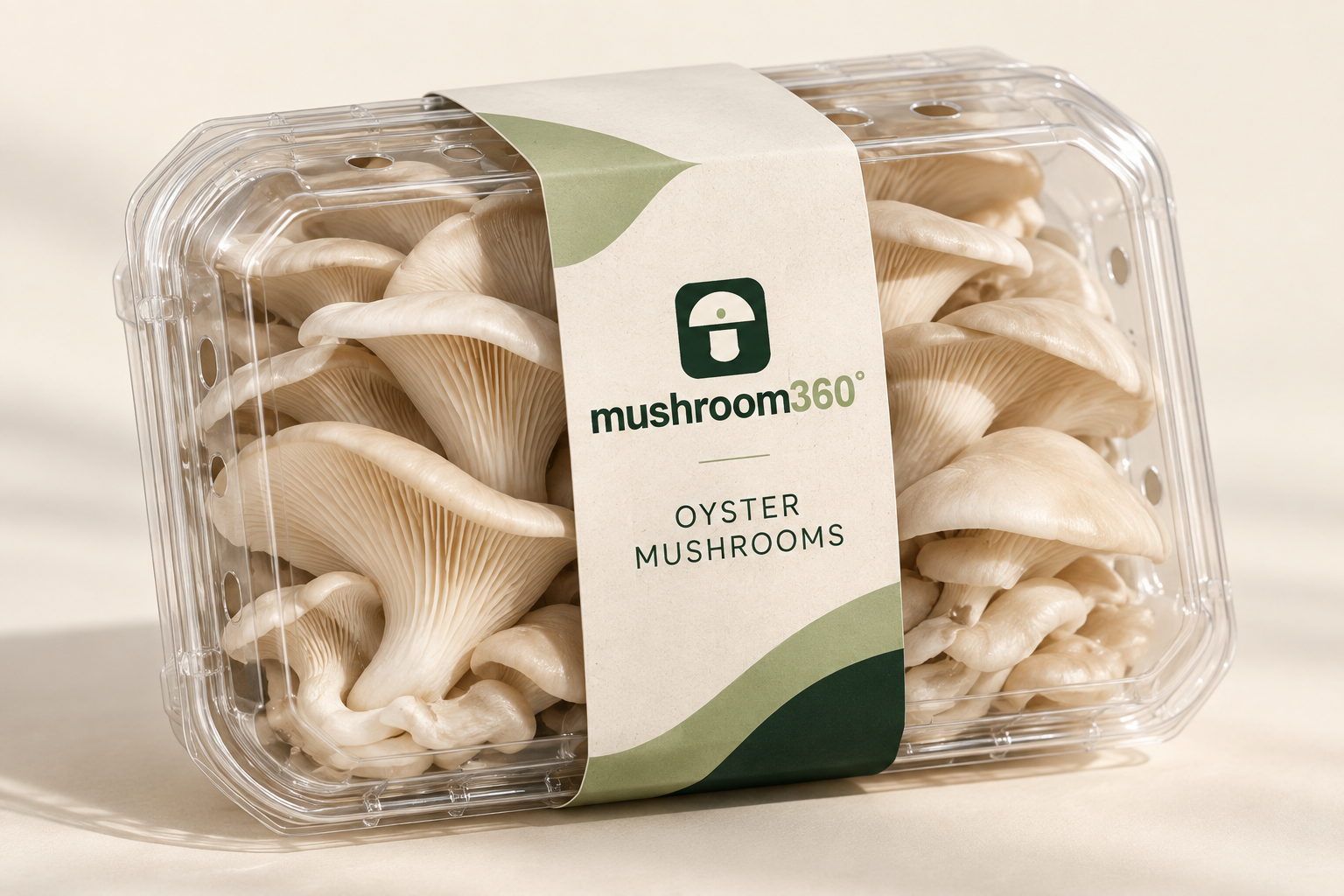
A pack concept that displays delicate oyster clusters and encourages careful handling.
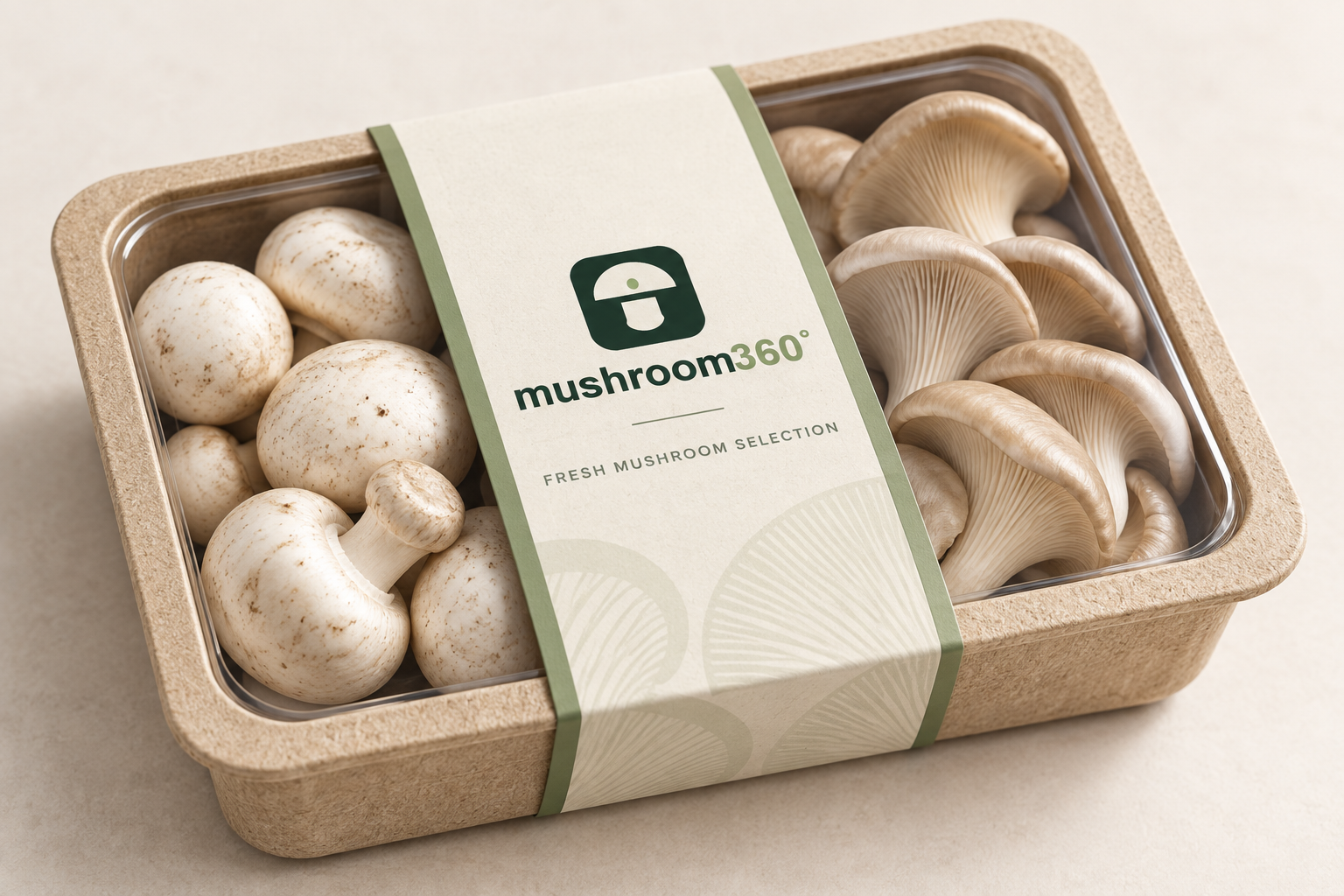
A molded fiber presentation concept for a curated assortment.
Possible transport formats and everyday Indian buying scenes.
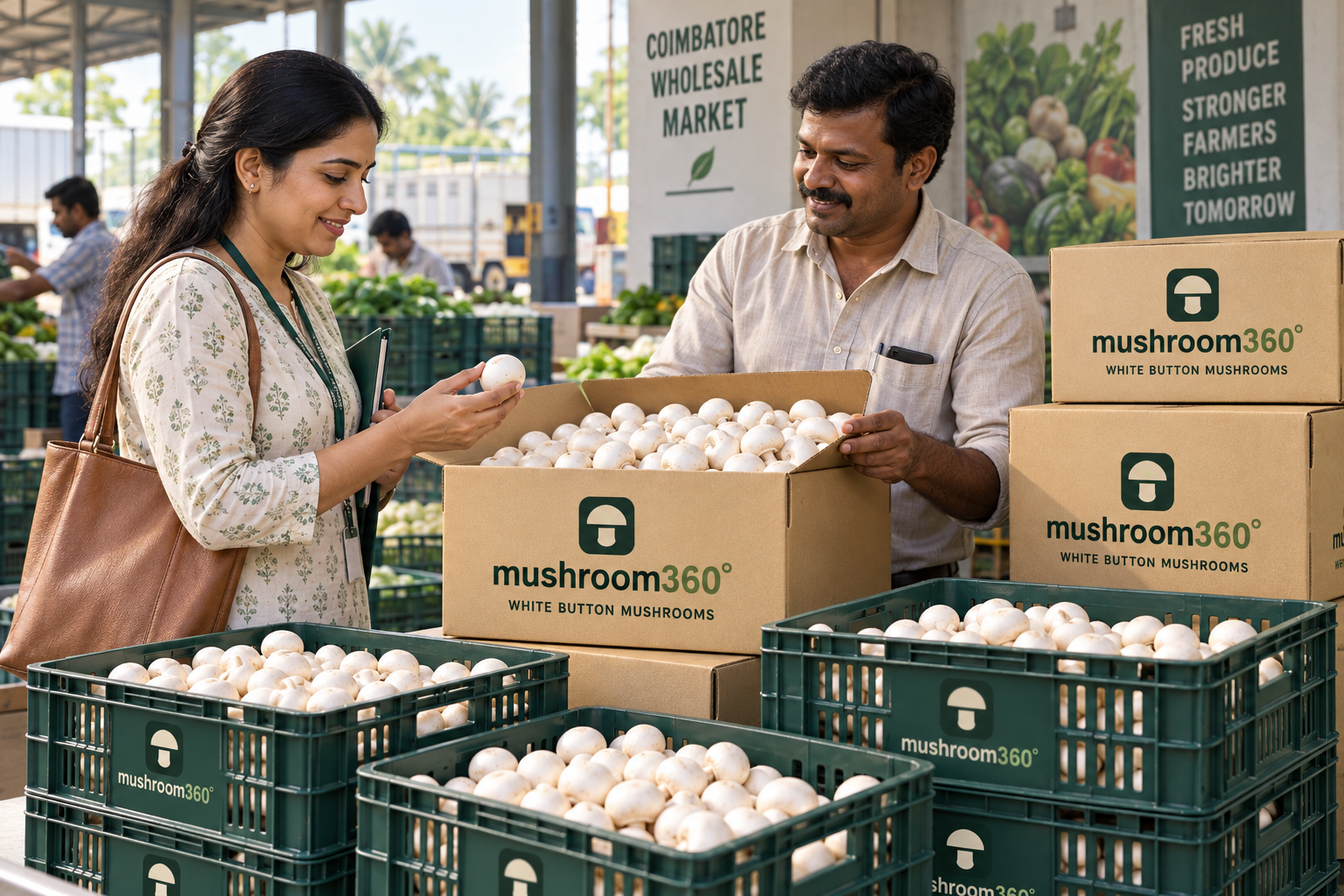
Stackable crates and cartons for produce buyers and distribution partners.
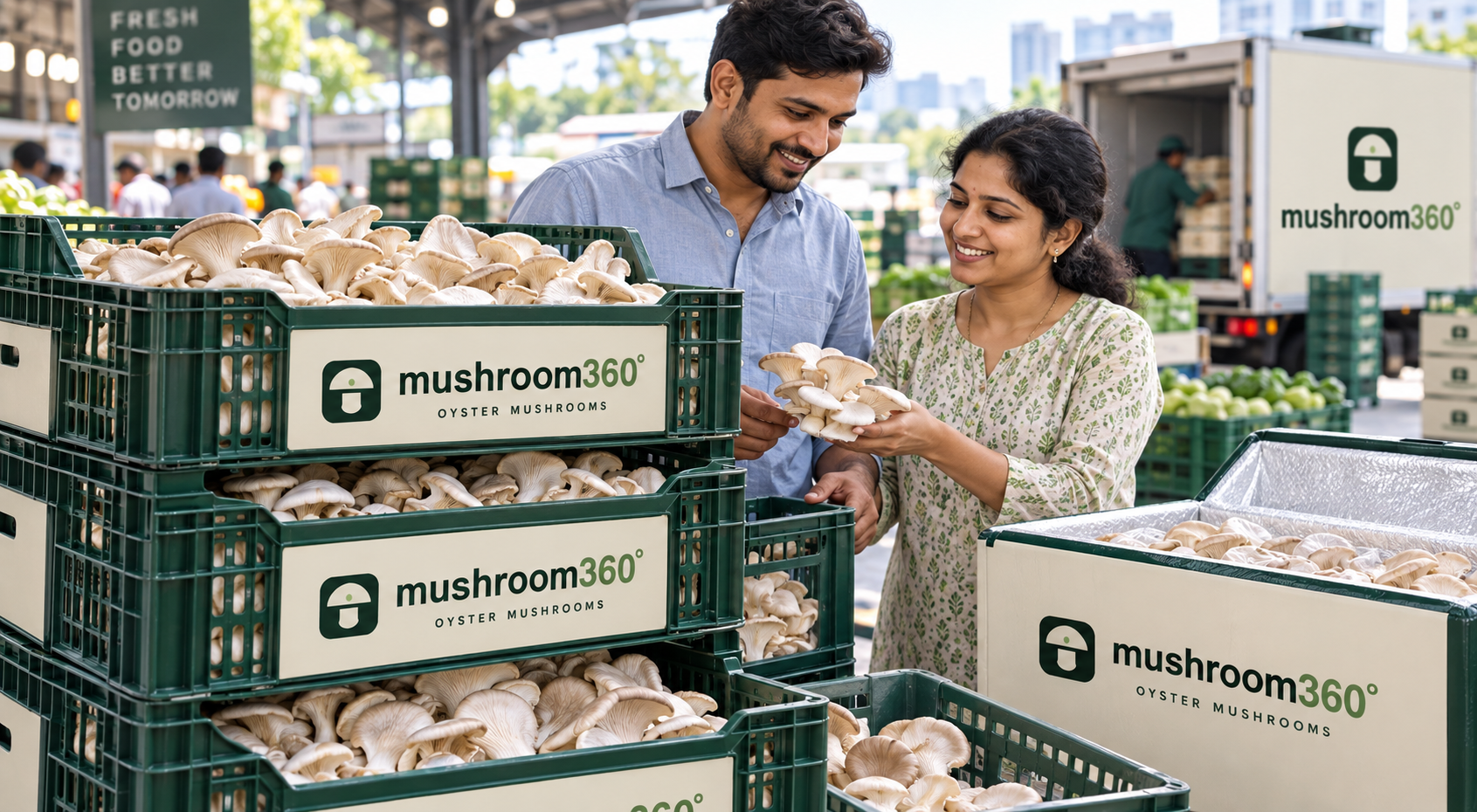
Protective pack and transport concepts for delicate oyster mushrooms.
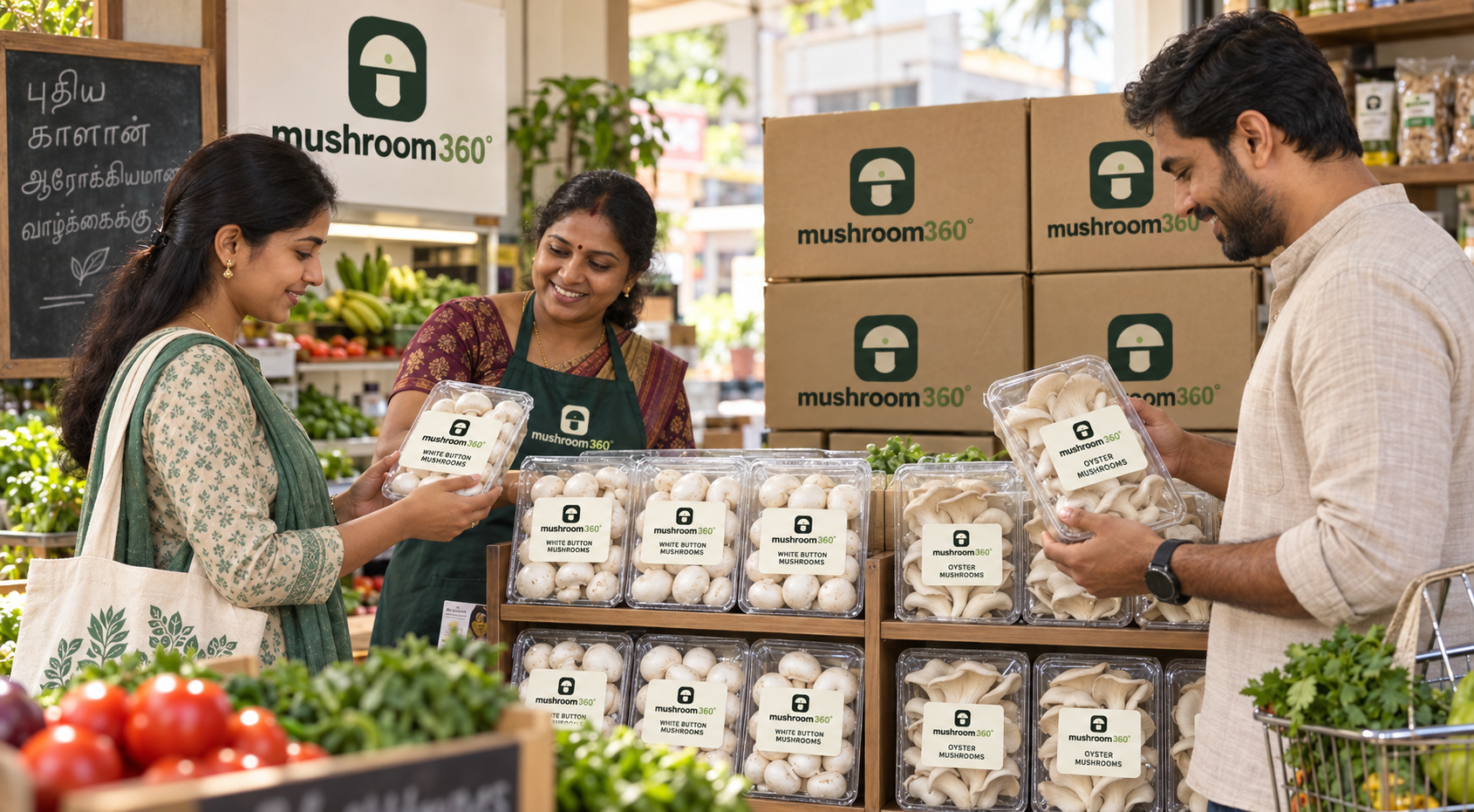
A glimpse of how Mushroom360° could appear in everyday produce shops.
Concept visuals only. The products, packs, store scenes, and people shown do not depict current Mushroom360° operations. Final materials, labels, weights, food safety details, and formats require testing and approval.
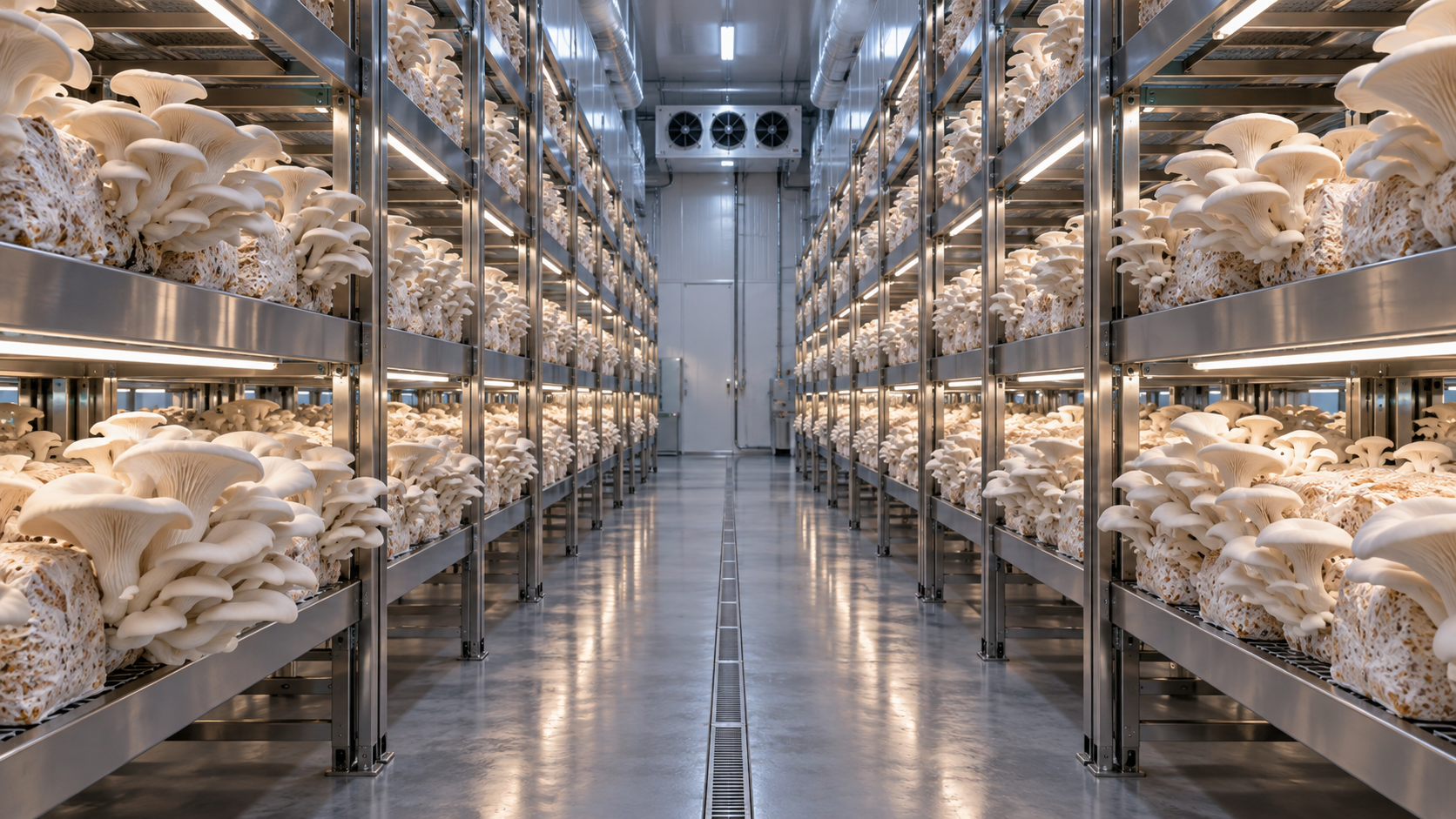 CONCEPT VISUAL · PLANNED FACILITY
Our proposed facility brings key steps into one coordinated operation. Room layout, growing inputs, process controls, harvest handling, packing, and logistics all influence the quality customers receive.
Reliable spawn, suitable compost and substrate preparation, and quality checks from the start.
Purpose-designed spaces with temperature, humidity, fresh-air, and hygiene management.
Careful picking, grading, packing, chilling, and dispatch.
Solar feasibility, energy efficiency, water management, and by-product planning.
We are assembling the knowledge, equipment, and operating partners needed for a serious commercial mushroom project. If you have delivered large-scale button or oyster cultivation, helped commission a facility, or supply a critical part of the chain, we would like to hear from you.
We welcome Indian and international experts who can share relevant project experience, technical specifications, installation support, training, and long-term service capability.
Introduce your expertise ↗Our growth plan starts with building the right technical foundation in Coimbatore. Each later stage depends on successful trials, financing, approvals, commissioning, customer demand, and dependable operations.
Bring together cultivation experts, equipment suppliers, room designers, spawn partners, and packaging specialists. Finalise the site, process flow, budgets, product mix, and supply agreements.
Install and validate growing rooms, compost or substrate processes, packing lines, cold storage, and operating procedures. Start with controlled crop cycles and ramp toward the planned 20 tonnes per day.
Strengthen quality, yields, transport, and local market relationships. Evaluate a later 100-tonne-per-day goal and expansion into major Indian cities while serving smaller communities.
All dates and capacities are planning goals, not a representation of current production or a guaranteed timeline.
Mushrooms bring savory flavor and texture to familiar meals. White button and oyster varieties also contribute nutrients while being naturally low in fat. They can be part of a varied diet enjoyed in curries, stir-fries, soups, rice dishes, and snacks.
Approximate values per 100 g raw edible portion from a USDA analysis. These are educational reference values, not Mushroom360° product-label data.
| Nutrient | White button | Oyster |
|---|---|---|
| Protein | 3.0 g | 2.75 g |
| Total fat | 0.34 g | 0.33 g |
| Dietary fiber | 1.45 g | 2.10 g |
| Carbohydrate* | 3.69 g | 5.95 g |
*USDA calculated carbohydrate by difference. Nutrient values vary with variety, growing conditions, storage, and preparation. Tested values are needed for final pack labels. This is general food information, not medical advice.
Tell us about your cultivation expertise, equipment, facility design experience, supply capability, or distribution proposal. We are especially interested in partners who can support a project from design through commissioning.